
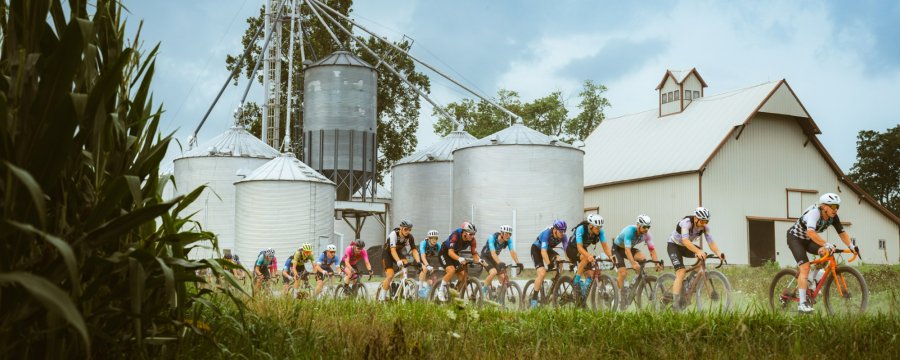
The Dust Bowl 100 has become an annual tradition for myself and several friends and coworkers who make the trip to Eminence each year. Gravel, heat, long farm roads, and a race community that shows up ready to ride and ready to help. This year, it felt especially meaningful to step into their journey with something concrete: an app built for the hardest part of their race day.
SAG Rescue started as a conversation that almost got tabled. Just a short time before the race, the idea came up as a classic “can we talk about this after?” moment. Race weekend was closing in: course details, volunteer briefs, and a hundred things that matter more than a software pitch. But after hearing it, I drafted out what I thought I heard and what it would take to address the biggest problem the organizers and volunteers face on race day.
That problem is familiar if you’ve stood near a support and gear (SAG) vehicle on a long gravel event. Riders are scattered across a hundred miles. Support is finite. Someone flats in a ditch; someone else needs a mechanical. A radio crackles, a group text lights up, a sticky note appears on a clipboard, and suddenly dispatch is guessing who is closest, who is free, and who already has a rider loaded. The ask wasn’t for another form. It was for a shared picture of the day: where help is needed, which unit can take it, and what happens next.
With a bit of zeal and confidence, I texted back and said our team could get this knocked out before the race.
We turned it around. For several days leading up to Dust Bowl, we iterated with the organizers: tightening the rider flow, the dispatch board, and the phone tools SAG crews would use in the field. Riders with an issue scan a QR and request help with their location. Organizers work from a live dashboard: map, open requests, assignments, and the course. Each SAG unit gets a simple field tool allowing them to accept, mark en route, arrive, load the rider, and then close it out. There was no app-store scavenger hunt. No “who has the spreadsheet?” No “this is overkill and way too expensive” event management toolkit. The loop simply stays closed from the ask until the assist is done.
Building under that deadline changes how you decide. You keep what race day needs and leave the rest. You listen when volunteers tell you what will slow them down. You make the statuses obvious and the map the source of truth. You ship something people can learn in minutes, because on race morning there are no training seminars… only start times and dusty roads.
We’re excited to see SAG Rescue serve the event well. The Dust Bowl has given me a challenge and fulfilling ride year after year. Getting to build alongside the people who put it on (and put a tool in their hands for the problem that keeps them up the night before) is a different kind of privilege than finishing the course. If it helps one rider get rolling again, or one SAG crew spend less time hunting the next assignment, it will have done its job.
Here’s to another Dust Bowl, and to hoping I and my friends don’t need to use the tool we poured a bit of our souls into these past few weeks.

Recent Comments